
Columbia County Blotter Availability
One candidate official route covers multiple days: the Police To Citizen Daily Bulletin. That link is a legacy application path. The sheriff's office posts no confirmed 72-hour or weekly window there. There is no working archive. No stated page depth appears, and no rule on photographs is published. Meanwhile, the CCSO Inmate Inquiry notice states that the current inmate list is no longer offered online. So the DailyBulletin URL exists. That alone does not make it a working Columbia County arrest log.
That distinction matters. A blank result could mean an inactive module, delayed data, or an empty technical shell. It does not mean no arrests occurred. Nor does an article's posting date equal the arrest date. Treat this wider-window process as a lead generator. Then confirm each lead with the agency that made or booked the arrest.
Read Columbia County Arrest Dates
Work backward by event date. Never assume the newest publication describes the newest arrest.
- Open the legacy bulletin only as a candidate route. Record the date searched and any date controls or last page that actually load.
- Separate incident time, arrest time, intake time, and publication time. They can differ.
- Note the arresting agency. Grovetown or Harlem Police may hold the incident report while CCSO holds county detention data.
- Call CCSO at 706-541-0754 for a current custody question, or use VINELink for one person's status and alerts.
- Submit a narrow CCSO records request for the booking record, release record, or daily incarceration list.
- Use the official Odyssey court portal or Clerk search to follow the case outcome.
The 24 Hour Arrests page serves a different job. It is the same-day workflow, not a historical search. A weekly article answers the same limits from the other side, since neither can tell you whether someone sits in a Columbia County cell right now.
Columbia Arrest-Log Record Fields
The old application model points to fields worth requesting. The office displays none of them online currently. A focused records request can ask for exactly the data you need.
| Field | How to interpret it |
|---|---|
| Full name and identifier | Use a birth date or booking number to avoid a mistaken identity. |
| Arrest date and time | May precede completed jail intake. |
| Agency and location | Shows who made the arrest and where, not necessarily where the person was booked. |
| Booked charge | An charge as entered at intake, not a conviction. |
| Bond and court date | May change after first appearance. |
| Release date | Answers when county custody ended, not whether the case ended. |
| Photograph | No current CCSO roster photo display is verified; lawful release is decided through the records process. |
Labels shift over time, too. A brief booking entry may later show up as a statutory citation or an amended court filing. A disposition is the court's outcome, such as dismissal, plea, acquittal, or sentence. No blotter supplies that on its own.
Weekend Columbia Arrest Reporting
Weekend and holiday volume invites misreadings. A Tuesday story might reflect a Saturday arrest, delayed transport, booking finished late, batch processing, or just a newspaper's production cycle. A burst of posts proves nothing about a surge. Count the actual arrest and booking dates first.
Custody can also move before a multi-day item appears. Someone bonds out while the booking record stays on the books. A person sentenced to state prison shows up in the Georgia Department of Corrections offender search, which is not a county arrest feed. Federal and immigration custody run on separate systems. Never collapse those states into one "inmate" result.
Columbia Arrest Archives and Retention
Retention rules help here. The Georgia Archives public-safety schedule lists the relevant record series. Daily incarceration lists stay on schedule for one year. Jail booking records run ten years after release. Jail registers run ten years past the final entry. Arrest-and-booking summary statistics carry a five-year schedule. Those periods govern the government's underlying records, not any promise of an online archive. The schedule still helps you name the right series when asking CCSO for older material.
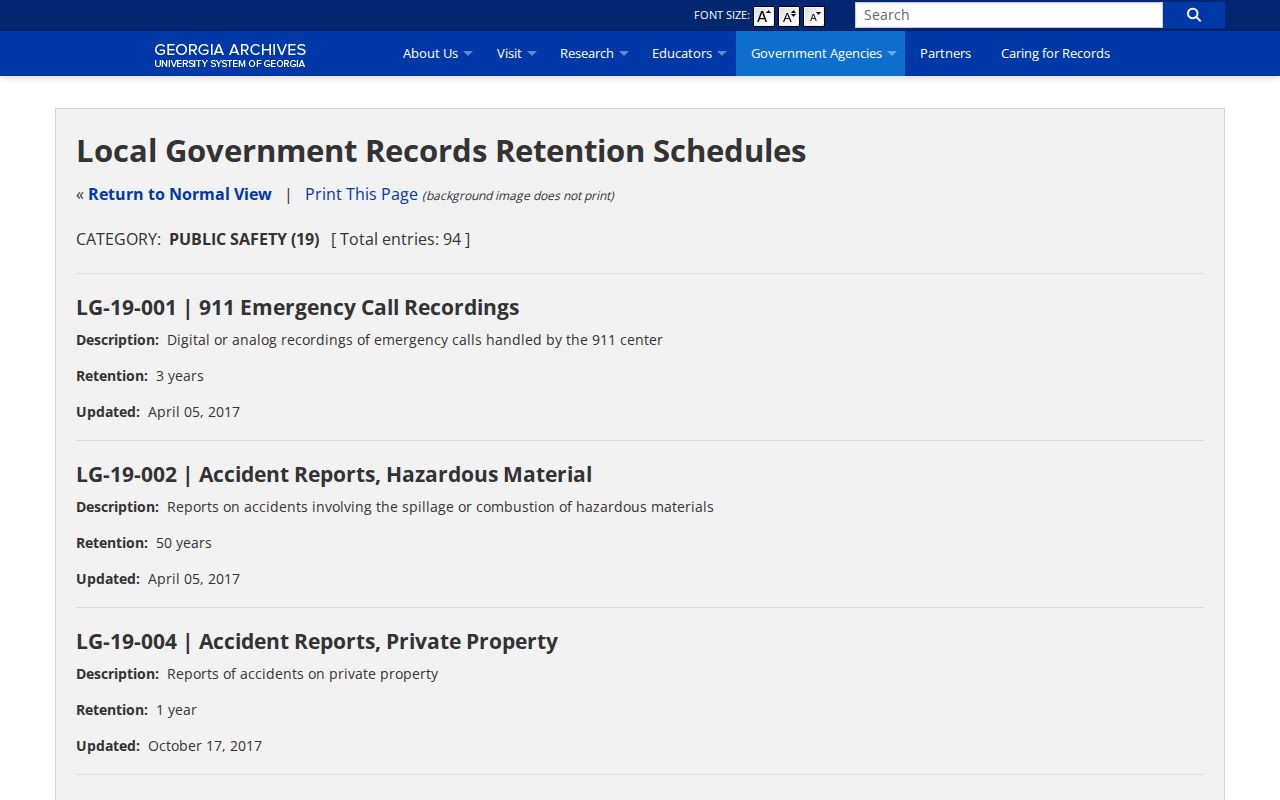
Start with CCSO. Ask whether a record remains local. Or was it destroyed under schedule, restricted, or transferred? Georgia Archives lists no confirmed transfer of recent Columbia County booking records. The active CCSO records page is the practical first route for a request.
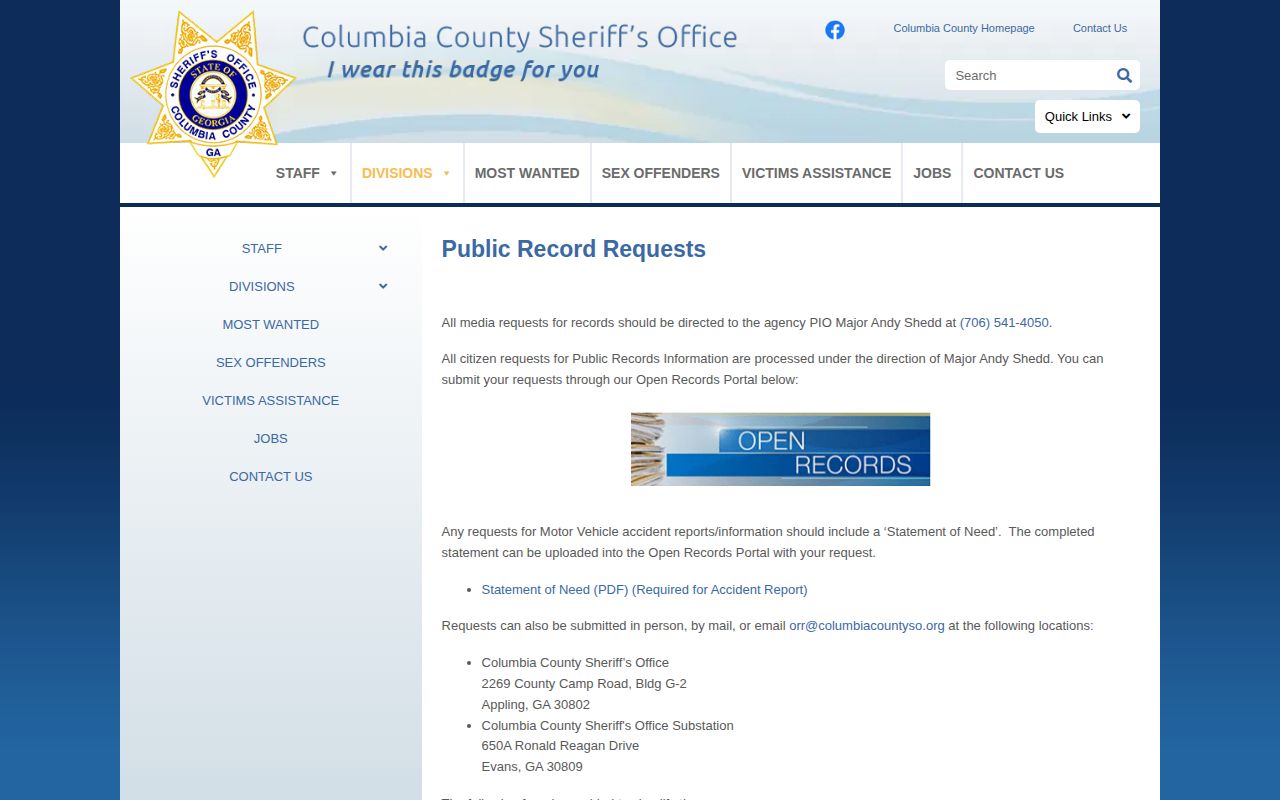
Put four things in every request: the agency, the record series, the date range, and any case or booking number you know.
Unofficial Columbia Arrest Coverage
Regional publishers supply leads once official channels come up empty. The Jail Report says its local photo pages generally cover the prior week to ten days. They also skip some arrests. The Augusta Press blends daily crime stories with weekly issue pages. The Georgia Gazette keeps a rolling county crime-and-court index. None is the official roster. None proves current custody or completeness. The Georgia Gazette Columbia County index shows that continuing third-party story layer.
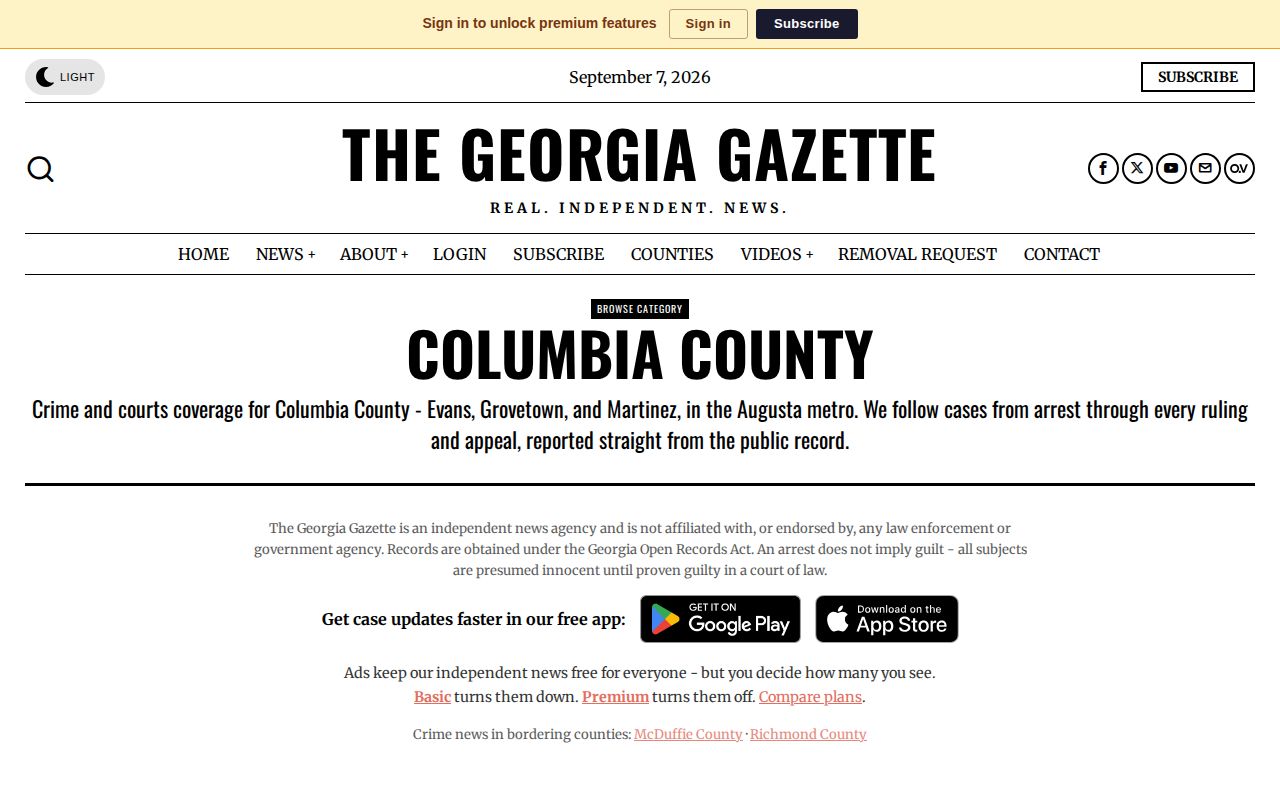
Treat a story date as a lead, nothing more. Check it against the CCSO booking date, then the official court docket. Never copy a publisher's photo as an official record. Other county aggregators offer deeper pages, yet they can duplicate entries, hold records of people long released, or carry stale charges. Official sources come first. Corrections belong with the publisher and the originating agency.
Verify Columbia Arrest Outcomes
A booked charge is only a starting point. A prosecutor can decline or revise it, and a court can dismiss it. Match the identity with care, then read the official docket for the outcome. The Columbia County recent-arrests hub maps the boundaries between records, roster, and photo. It also covers warrant and court material.
Request a Columbia Date Range
Write the request with care. Name the agency, the start and end dates, and the person if you know it, then ask for the daily incarceration lists when the question is who was held in Columbia County on certain dates. Need identity, charge, bond, or booking time? Request the booking record itself. City officers create their own incident reports, so get that paper from the municipality.
The Georgia Attorney General guide recommends writing straight to the records custodian. CCSO's form promises an answer within three business days when the records exist, or a statement of estimated time and cost. One limit applies. No agency must create a compilation that never existed.
Log each request. Tracking dates sent and answers received keeps a broken interface separate from a true no-record response, and helps compare publication dates with arrest, booking, and release dates.
Columbia Records Outlive Feeds
Georgia's retention schedules explain the gap between a live blotter and an agency archive. Daily incarceration lists last one year. Booking records survive ten years past release. Jail registers run ten years past the last entry, while warrants, transfer files, hold records, and statistics follow their own schedules.
Retention does not mean online access. Nothing in the schedule proves transfer to Georgia Archives, and material may sit with CCSO until an approved disposition event. Start locally, then ask two questions. Is the series still held, and was it destroyed or transferred if not?
Restriction and retention are separate things. Restricted records can stay on the shelf while public access narrows, and an unofficial publisher may hold a copy long after custody ends, so neither a lingering article nor a missing web page tells you what government holds today.