
Columbia County Recent Arrest Channels
No single live feed covers Columbia County arrests. That surprises people. The Columbia County Sheriff's Office once ran Police To Citizen modules for Inmates, Recent Arrests, and the Daily Bulletin. Those pages still load in some form. Loading is not the same as updating. The current CCSO Inmate Inquiry notice says the online current-inmate list is gone and points the public to the Columbia County Detention Center in Appling. Treat that notice as the controlling word.
Timing matters too. A fresh arrest may not be through intake yet. Booking logs identity, agency, charges, and property. From there a person can bond out, get released, or transfer. Each step moves the record somewhere new.
| Window | Published status | Official path |
|---|---|---|
| Same day | Legacy recent-arrests route; live window unverified | Detention inquiry, then VINE |
| Several days | Legacy bulletin; depth and cadence unverified | CCSO date-range request |
| Current custody | Public list withdrawn | Call 706-541-0754 |
| Older event | No promised online archive | Agency, court, then archives if transferred |
A very fresh event fits the 24 Hour Arrests page. For the wider blotter and archive question, the Arrest Log page covers that ground without treating either old module as proven.
Columbia County Arrest Roster Status
The headline fact is nonpublication. CCSO posts no searchable inmate list, no photo grid, no update time, and no stated online retention period. The jail still keeps booking files and photographs. The public just has to ask directly. That gap is real. Older results may point to the Police To Citizen catalog, a legacy route unless CCSO confirms a live result.
The official inmate inquiry page shows the fallback:
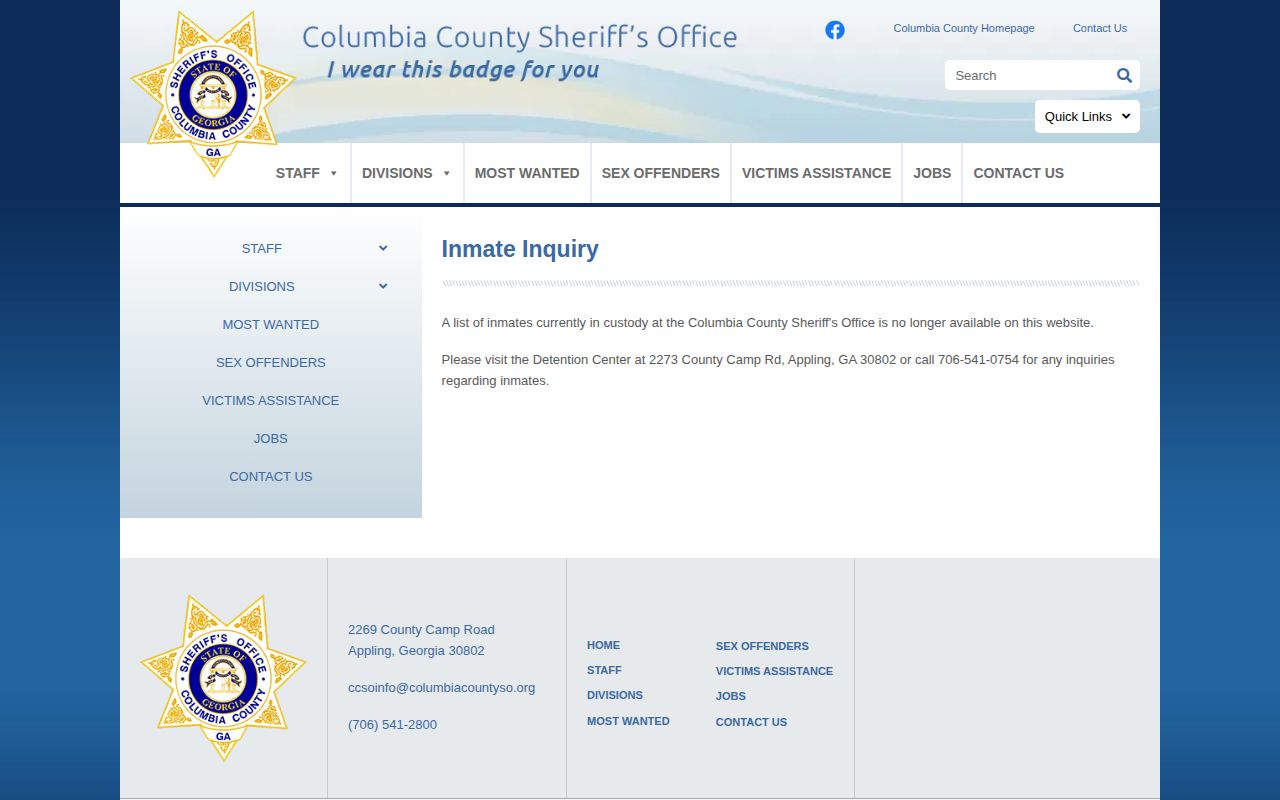
A call or a written request beats any undated roster copy for Columbia County arrest information.
| Detail | Current use |
|---|---|
| Name and birth date | Separate people with similar names |
| Arrest or booking date | Define the event and request range |
| Booking number | Identify one detention record |
| Arresting agency | Route the police report |
| Custody status | Confirm through CCSO or VINE |
Call 706-541-0754 first. Then check VINE. The Georgia Department of Corrections directory separately lists 706-541-3920 as the jail's primary number, and a records request can yield the booking sheet and any releasable image; for Grovetown or Harlem arrests, ask that city too.
How Columbia Booking Processing Ends
CCSO release guidance covers identity and charge matching, an automated wants-and-warrants check, a property inventory, and lobby release. Bond can be cash, property, surety, or cash-only under the order. A $20 bond-originating fee also applies.
Searches fail during intake. The jail may still be confirming identity or charges. Someone can also be cited, taken for medical care, moved, or released before any record exists. Give the detention center a precise name and event time. Keep the date and source of its response.
Does the Sheriff App List Bookings?
The official Columbia County Sheriff app handles public-safety news, reporting, and tips. No booking roster, mugshot lookup, or custody alert appears. Georgia VINE fills the custody-alert role. CCSO confirms local detention-center participation. VINE checks one person's status and registers notices, though it is no booking sheet or court docket, and its data can lag. Confirm urgent results with the detention center, and call 911 for immediate danger.
Where Columbia County Records Appear
Official sources lead. Custody sits with CCSO and VINE. A police report belongs to the arresting agency, court portals show later case events, and state or federal tools apply only after custody shifts.
| Channel | Photo? | Role |
|---|---|---|
| CCSO inquiry | No online gallery | Official custody contact |
| CCSO request | Ask by name and date | Official booking file |
| Georgia VINE | Not a photo source | Status and alerts |
| County courts | Usually no mugshot | Disposition |
| GDC search | May show state image | State custody only |
| News and archives | Varies | Unofficial discovery |
Plenty of regional outlets cover the county. The list includes The Georgia Gazette, The Jail Report, The Augusta Press, Augusta Chronicle, WJBF, WRDW, WFXG, and CSRA Crime. Commercial archives add RecentlyBooked, Arrests.org, Mugshots.com, and AugustaCrime. They cannot prove custody or warrant status. Test every claim with the agency and the docket.
The Georgia Gazette Columbia index shows the reach of independent news. It reaches back farther than a custody check and may surface an older lead. It is still not a county government source. A publication date can mark when a reporter received a file, not the arrest date. Log the date and spelling, then test both against CCSO and the docket.
Columbia County Arrests by City
Arrest location and booking site can differ. Grovetown and Harlem both have police departments. Yet their arrestees are often booked at the Columbia County Detention Center in Appling, so a city report and a county booking file can describe one event. Appling is unincorporated, with no municipal police log, so CCSO is its main authority.
- Grovetown Recent Arrests: police reports and county booking.
- Harlem Recent Arrests: police records, CCSO dispatch, and county custody.
- Appling Recent Arrests: sheriff enforcement and detention intake.
Grovetown and Harlem are the only incorporated cities. Appling stays on the map as the county seat. Evans matters for courts but does not replace the county seat.
Columbia County Arrest Record Fields
A booking record is the jail's intake file. It is not a police narrative, indictment, or judgment. The legacy system hints at which fields may exist, while the current no-list notice means no online display can be promised.
| Field | Meaning |
|---|---|
| Name and identifier | Booked identity and unique number |
| Arrest and intake dates | Agency action and jail processing times |
| Agency and case number | Who arrested and which report to seek |
| Charges | Intake charges, not proof |
| Bond and court | Initial terms, subject to change |
| Release or transfer | Movement from county jail |
| Photograph | Intake image if lawfully releasable |
A booking entry in Columbia County starts with the arrest charge, and that label can move as the case does. The court docket tracks each change, from dismissal to trial to final resolution.
Request Columbia County Arrest Records
CCSO gives you several ways to request arrest records. Use the portal, email orr@columbiacountyso.org, send mail, or walk in. Phone requests work too. Call 706-541-1042 on weekdays between 8 a.m. and 5 p.m. The records page lists 2269 County Camp Road, Building G-2, Appling, GA 30802, while the detention center sits at 2273 County Camp Road. Check the building number before you drive out.
The CCSO records page lists the official submission choices:
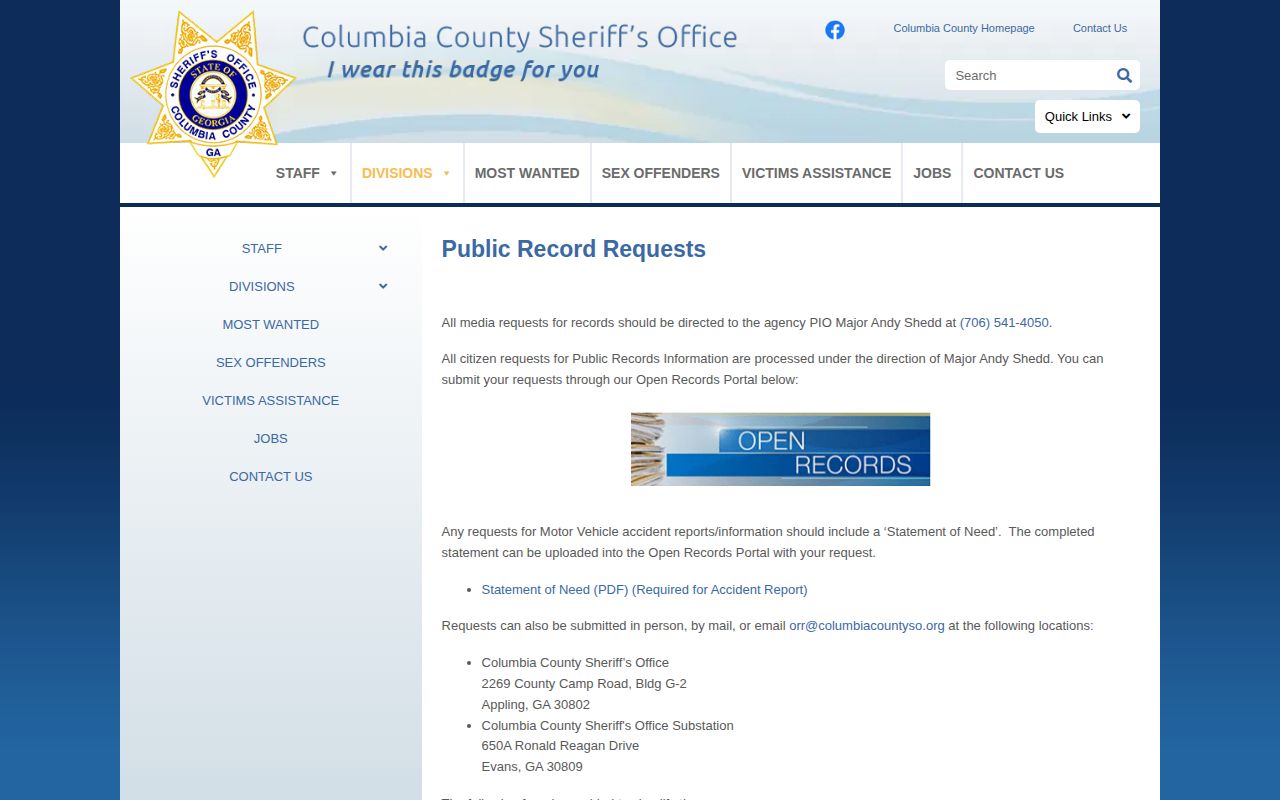
This route reaches the custodian of the booking file and releasable image.
- Give the exact name and known birth date.
- State the date range and agency.
- Ask separately for booking sheet, release entry, and photo.
- Add a case or booking number.
- Request an electronic copy and estimate.
- Use identifiers in the court search.
The request form sets a three-business-day response framework. The first 15 minutes of staff time cost nothing. After that, charges run $0.10 per page and $0.25 per CD. O.C.G.A. 50-18-72(a)(20) lets the agency shield protected personal information.
Columbia County Arrest Photos
CCSO posts no booking roster, but a Columbia County arrest photo may still exist. Ask for it by exact name, date, and agency. Georgia law controls this. O.C.G.A. 35-1-19 governs booking-photo requests and how agencies use photos on their websites. You may need to state your use. The law blocks release tied to pay-for-removal schemes.
The state system tells a different story. GDC can display a photo for someone held in state custody, yet that image reflects a state sentence, not a fresh county booking. Someone who bonded out or stayed pretrial may not show up at all. State photos also lag or go missing.
Private archives demand caution. RecentlyBooked offers conflicting photo language. Arrests.org and AugustaCrime provide no verified local free opt-out. Mugshots.com pushes its own correction claim rather than state policy. The Jail Report says it takes no payment to keep a photo posted and offers a route for dropped charges or not-guilty results.
Georgia Arrest Law and Removal
Georgia's open-records law reaches agency documents, photos, and computer data, with exemptions carved out. Victim details, juvenile material, sealed files, medical data, and investigative records can be redacted. Any denial should cite its legal basis.
For clearing a record, Georgia uses a process called record restriction. The state instructions split cases into arrests before and after July 1, 2013. Restriction limits access in qualifying cases. It does not guarantee every copy gets destroyed or updated at once.
The Georgia Attorney General explains qualifying photo-removal rights:
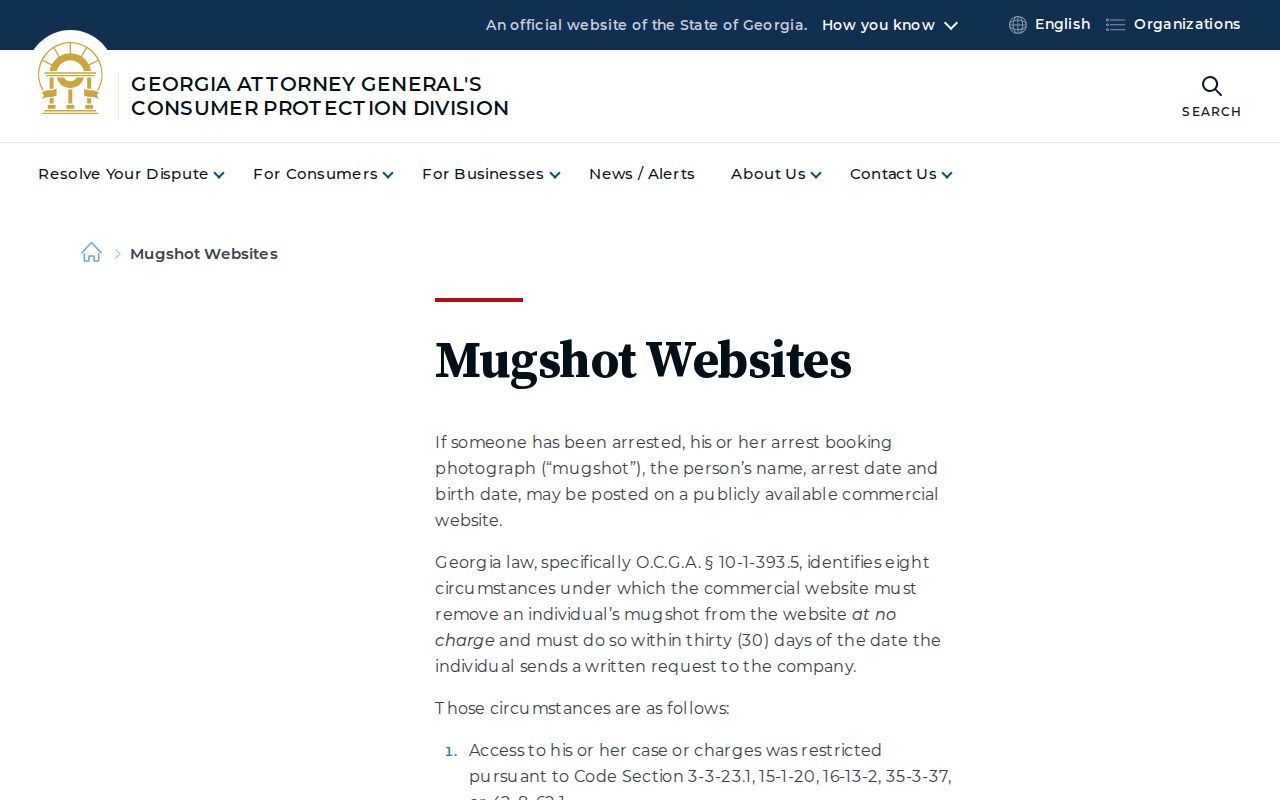
Relief depends on the case outcome and your proof, never on paying a deletion vendor.
How Long Arrest Records Remain
A web result that disappears does not mean the record died. Georgia Archives keeps incarceration lists for one year. Jail booking records and inmate files last ten years after release. Jail registers also run ten years past the final entry, and summary statistics hold for five. None of that promises online access.
The state public-safety schedule identifies each series:
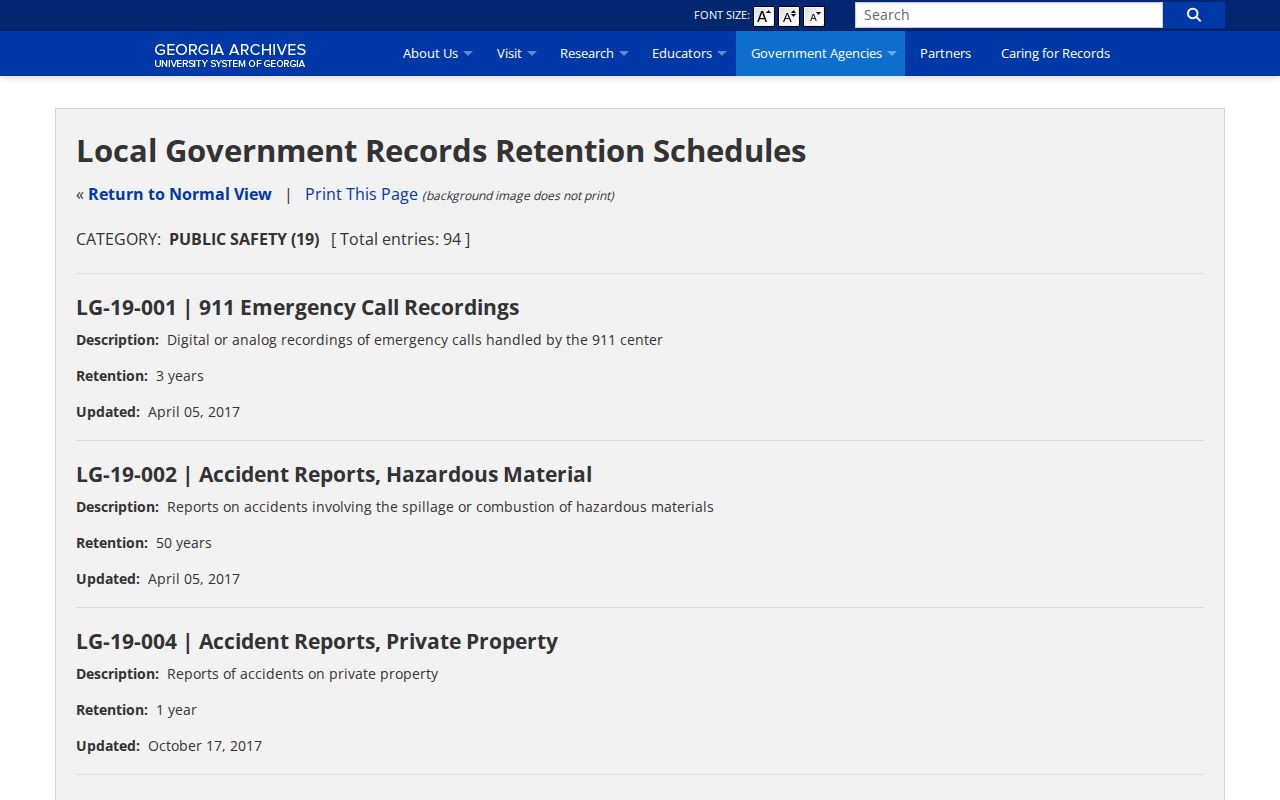
That schedule frames an old request, but it cannot prove a Columbia County file reached the state archives.
Start with CCSO. Try the city police if it wrote the report. The court holds the disposition. Georgia Archives only matters if the local custodian calls the file historical or transferred. Columbia County lists no verified booking transfer.
Columbia County Arrest Warrants
CCSO runs a Most Wanted page with photos, case details, and a simple instruction: call dispatch at 706-541-2800 after any contact with a pictured subject. Treat it as an alert, not a jail roster. The page shows no schedule, reward, archive, or anonymous-tip program.
The official Most Wanted page shows its alert format:
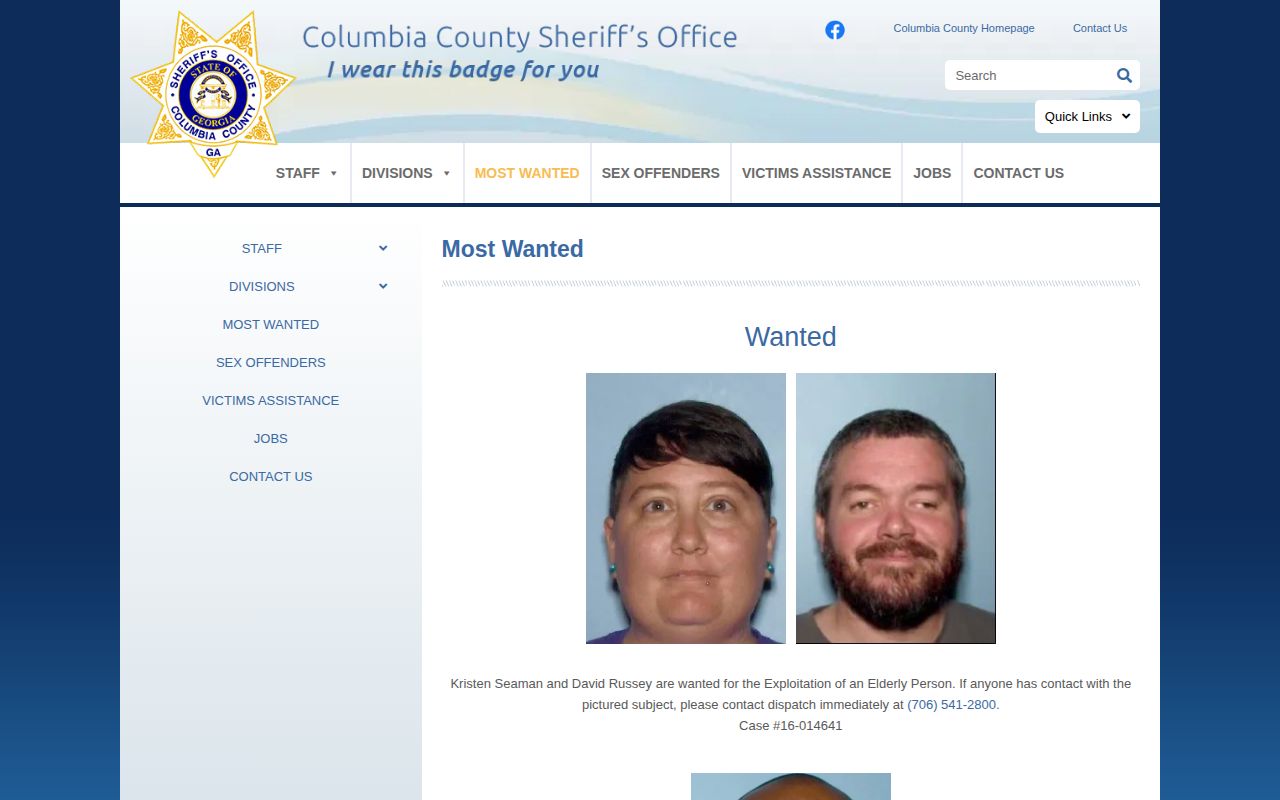
Read the page as an agency alert rather than a gallery of arrests or a court result.
Columbia County offers no public warrant portal. Magistrate Court issues warrants and handles preliminary hearings, first appearances, and many bond decisions. For your own status, contact CCSO or the court, then talk to an attorney. Never approach a wanted person. In an emergency, call 911.
After a Columbia County Arrest
Booking happens in Appling. Hearings often do not. Much of the court work unfolds at the Justice Center in Evans, where Magistrate Court handles first process and Superior Court takes felony and misdemeanor criminal cases.
Search the Clerk criminal system by name or case number. Then read the docket. Odyssey offers another official route. Arraignment is where a plea gets entered. Disposition is the result, whether dismissal, plea, acquittal, or sentence. The booked charge is only the opening label on a Columbia County arrest.
Custody Beyond Columbia Arrests
GDC search covers state custody only. A sentenced person may move from the county jail into that system. A new arrestee often will not appear, though. Federal tools answer different questions. The BOP locator tracks federal imprisonment and records from 1982 onward, not fresh local bookings. It also offers no public photo gallery. The ICE locator finds people in ICE custody or recently held by Customs and Border Protection. It needs exact identity details or an A-number plus country of birth. U.S. Marshals sometimes house federal pretrial detainees in contracted local jails. They publish no national recent-arrest roster. A search that comes up empty means one layer failed to confirm the person, nothing more.
From Appling Jail to Evans
A Columbia County arrest usually starts at the detention center in Appling, then moves into court. From there, the case travels to Evans. Most of the action happens in Evans. The Justice Center there hosts the Columbia Judicial Circuit's Superior Court, which handles felony and misdemeanor prosecutions. Magistrate Court sits nearby. It reviews arrest and search warrants, runs first appearances and preliminary hearings, and sets bond in many Columbia County cases. The old Appling courthouse still hosts court a few times each year. So booking and docket entries may list two different towns.
If a booking file has no court number, start with the full name and the approximate arrest date. Don't assume the agency number matches the clerk's. Compare them directly. Read the later docket entries as well, because a bond order can change and a prosecutor may reword, drop, or decline a count. Write down the date you searched. It shows which entry was current.
The docket stages matter more than the copied charge. A first appearance is an early review, a preliminary hearing tests whether the case may continue, an arraignment takes the plea, and a disposition is the final outcome.
Booked, Released, or Transferred
Custody status shapes the next search. A person just booked can be confirmed at the detention center or on VINE. Someone released may drop out of custody tools. The booking sheet is still requestable, though. A state prison sentence moves the record into the GDC system. Federal imprisonment and immigration detention require their own federal tools.
| Status | Best source | Record limit |
|---|---|---|
| Just booked | CCSO inquiry | Intake may still be underway |
| County custody | CCSO and VINE | Status can change quickly |
| Released | CCSO record and docket | Booking data may remain |
| State sentenced | GDC offender search | State record and possible image |
| Federal or ICE | Matching federal locator | Separate authority and identifiers |
Note which system you searched. Names repeat in Columbia County. A blank GDC result says nothing about a same-day arrest, and an old booking does not prove someone is still in jail. Confirm close matches with full identity details rather than a name alone.
Which Columbia Details Are Withheld?
Not every field is public. Georgia's open records law allows exemptions. Expect redactions for medical facts, internal jail classification, protected victim details, juvenile data, sealed files, and confidential investigative methods. The CCSO request form warns that personal information may be withheld under state law.
If part of an arrest record is cut, ask the custodian for the legal basis. A partial release can still help. The booking date, agency, charge as booked, release entry, and case number often answer the main question. Turn to the court record for the result. Restriction changes access. Even so, the Georgia Archives schedule says restriction does not shorten the underlying retention period.